
why everyone loves fred again
on intimacy at scale through music and culture

there’s a version of this essay that talks about algorithms, virality, and the role of tiktok in the music industry. this is not that version.
this is about why people who never cared about electronic music suddenly can’t stop grooving to techno. why language doesn’t matter. why your spiritual age is timeless. why borders dissolve the second the beat of delilah (pull me out of this) drops.
my sister went to one of fred again’s shows in melbourne without knowing who he was. no context, no discography deep-dive, no “this is a big deal” framing. she just went because a friend asked her to, and she experienced the best concert of her life. fred again.. didn’t show up as a “techno guy” who “makes electronic music”. he was the dude who managed to hold a crowd that barely new anything about him.
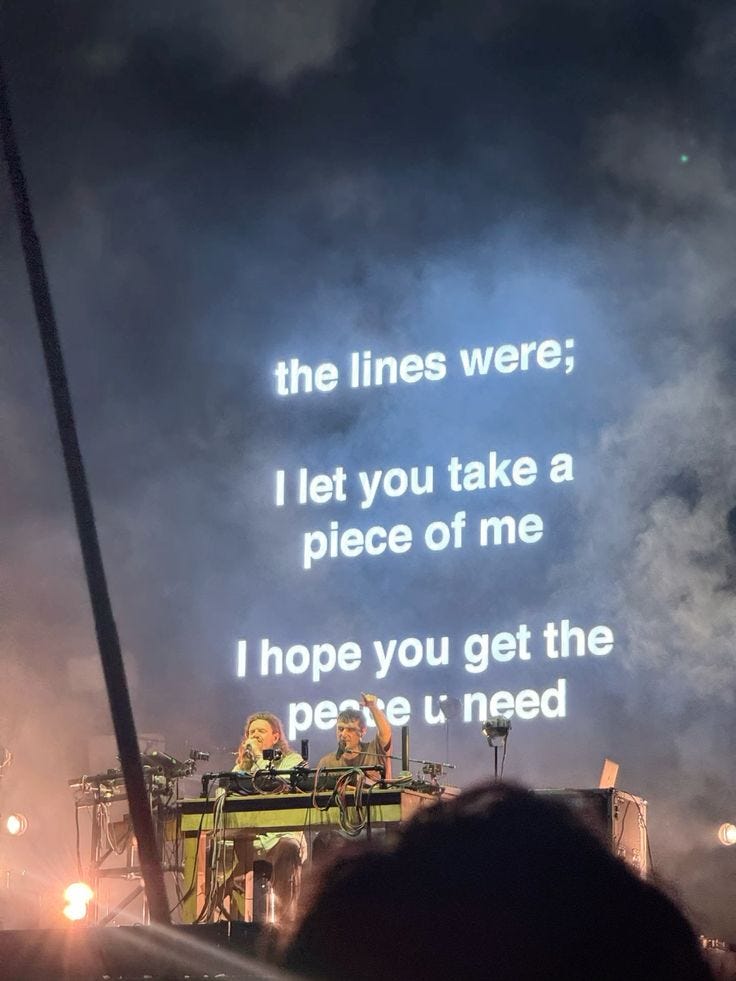
fred again.. doesn’t make “electronic music.” he makes evidence of being alive through sound.
there’s zero intention to prove credibility to a subculture. it’s trying to reach someone sitting alone in their room at 2am. someone who doesn’t know the difference between house, techno, or ambient - but knows what it feels like to miss someone, to spiral, to hope, to feel alive for three minutes. fred teaches us that you don’t need to understand the genre to understand the feeling.
for a lot of people (me included), pure beats have never been enough. for years now, techno has felt impressive, but distant. rhythmic, but closed off. fred changed that.
he blends spoken word, voice notes, fragments of real life with beats that don’t overpower the emotion but rather they carry it. the lyrics aren’t polished pop hooks; they’re confessions. overheard thoughts. unfinished sentences.
you don’t dance to it. you move through it.
1) his core innovation isn’t “edm” - it’s documentation
the Actual Life (April 14 - December 17, 2020) concept is the thesis: life as source material. voice notes. scraps of conversations. instagram clips. tiny phrases that carry the entire emotional weight of a day. (that’s why the track titles read like diary entries.)
language barriers fall away. one doesn’t need perfect comprehension when what they’re hearing is tone, breath, hesitation, relief. the human nervous system understands that before it understands words.
example: Marea (we’ve lost dancing)
this is one of the clearest “fred formulas”: take a real spoken moment about collective grief, loop it until it becomes prayer, then let the beat arrive like a door opening.
built from a conversation with The Blessed Madonna about lockdown and the loss of dancefloors :
that’s why it crosses age too: older people hear the melancholy and memory; younger people hear the release and hope. same track, different doorway.
2) he makes “big” music that still feels like it was made for one person
fred’s biggest songs are often structured like private messages that accidentally became an anthem.
example: Delilah (pull me out of this)
people treat this track like a conversion experience because it does two things at once:
it spirals (like a panic thought)
and then it lifts (like your friends showing up)
the vocal source traces back to Delilah Montagu’s “Lost Keys,” which fred flips into something that feels less like a remix and more like emotional rescue.
the reason it hits non-edm listeners: it’s narrative tension. you’re not waiting for a beat - you’re waiting for a turning point. you’re clinging onto hope that delilah will pull you out of the funk you’ve been in, and that someone noticed that you weren’t yourself in the ways you were pretending to show up.
3) he’s not hiding behind the illusion of techno
fred didn’t come up through the club circuit alone. he came up through songwriting rooms. before he was “fred again..,” he was fred gibson: producer, collaborator, studio rat. he worked with everyone from Ed Sheeran to Stormzy, absorbing pop structure, emotional pacing, and the discipline of finishing songs. this is important context.
he understands hooks because he’s written them. he understands restraint because he’s been in rooms where too much is punished.
so when people say his music feels “emotional but controlled,” that’s not accidental - it’s trained - and it’s the sign of a great artist
if someone thinks fred is only for the EDM bros or people pretending like they enjoy techno, send them the NPR Tiny Desk Concerts performance. the songwriting is real, even when you take the club away.
the setlist itself tells you what he values: storytelling + tenderness + controlled chaos - including Kyle (i found you), Me (heavy), Faisal (envelops me) (and ofc, “delilah” is in there too)
fred again.. is obsessed with the craft, the impact, the joy of simply creating things.
4) boiler room + the live edits are where the cult is born
his Boiler Room: Fred again.. in London, Jul 29, 2022 is more than just a set - it’s a public coming-of-age ritual. it’s where people realize: oh, this guy is treating electronic music like a living organism (and not a playlist)
it’s also where he proves his “bridge” talent: pulling in people who came for emotion, and then sneaking them into rhythm.
exhibit A: Danielle (smile on my face)
it samples 070 Shake and turns it into something that feels like a sunrise you can dance to. four tet’s involvement is part of why it lands so cleanly: it has underground discipline but pop-level clarity.
exhibit B: Jungle
the track is a thesis on “tension without aggression,” and it’s literally built on smart sampling (including a nod to Daft Punk via “Revolution 909”)
critics sometimes call this emotionally vague or “montage-like” 0and that critique isn’t wrong in places. even pitchfork and the guardian have argued that the diaristic framing can feel like it gestures at depth without always delivering it.
but here’s the nuance: the vagueness is also what makes it portable. he leaves space. listeners pour themselves in.
5) the instagram is not marketing - it’s the distribution system for sincerity
his handle — @fredagainagainagainagainagain — and the bio line (“usb is infinite”) is his entire release philosophy: music as an ongoing stream, not an album cycle.
he posts like someone who’s still surprised any of this is happening. rough clips. studio moments. thank-yous. “here’s what i’m working on.” it’s intimate enough that you feel close, but not so manicured that you feel sold to.

and because so much of the music is built from real clips/voices, the instagram becomes part of the canon. you’re not just consuming tracks but you’re watching the track become itself. you witnessed its birth and felt like a part of something before it blew up
6) the “big events” because they reveal his role in culture
fred’s rise should not just be attributed to the massive spike in streams and genZ boys playing his stuff on loop. it’s more about the moments where people collectively decide someone matters.
coachella 2023: the emergency headliner that felt like a rescue
when Frank Ocean dropped out of weekend 2, fred + Skrillex + Four Tet stepping in wasn’t just a booking change - it was a cultural correction: a messy, disappointed crowd gets given something communal again.
msg / nyc week: when “internet music” became a real-world stampede
the madison square garden story (sold out fast, pop-ups, times square chaos) showed the scale of his gravity, but the reason it worked is that he kept the feeling intact at stadium size. this is what i call “intimacy at scale”
the newer era: “ten days” + “usb” is him trying to scale intimacy
fred again’s bigger arc is:
actual life = diary-as-house-music
Secret Life = inward, ambient, almost private to a fault
ten days = “ten songs about ten days” — zooming out while trying to keep the close-up
usb (and especially USB002) = club-forward sprawl, like he’s testing how far his sound can travel without losing his fingerprint

that evolution matters because it shows ambition and risk: he’s trying to be bigger without becoming generic.
what this means for artists: sincerity as an operating system
fred again has something rare: charisma without ego.
people ask if he is the next Avicii or David Guetta. that instinct makes sense - we like linear histories. but fred isn’t here to define an era by scale. he’s defining it by intimacy. less polish. more fingerprints.
the artist and his work has remained constant pre and post fame.
london. beer. cigarettes. long nights. obsessive work ethic. deep feeling.
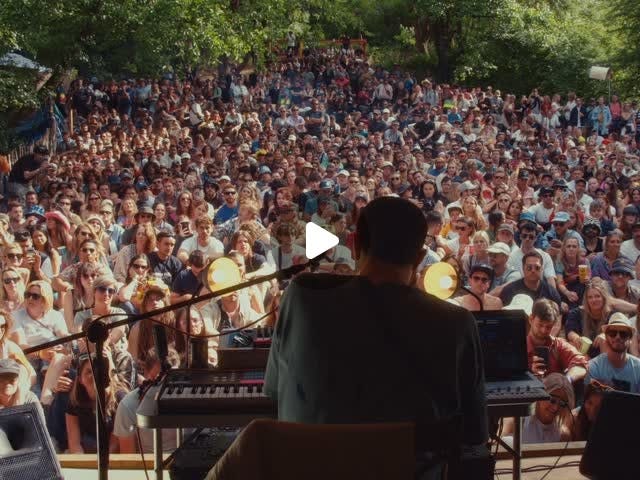
that’s why it lands worldwide. it isn’t the performative authenticity with which artists carry themselves today. it’s raw and it’s real and it speaks to the youth.
people love fred again because he gives them permission to feel without embarrassment.
in a culture drowning in curation, he’s creation-first.
in an industry addicted to branding, he’s process-forward.
in a generation fluent in irony, he’s painfully earnest.
he reminds us that music isn’t content or something that needs labels through billboard charts or streams through a tiktok algo - music is a shared nervous system.
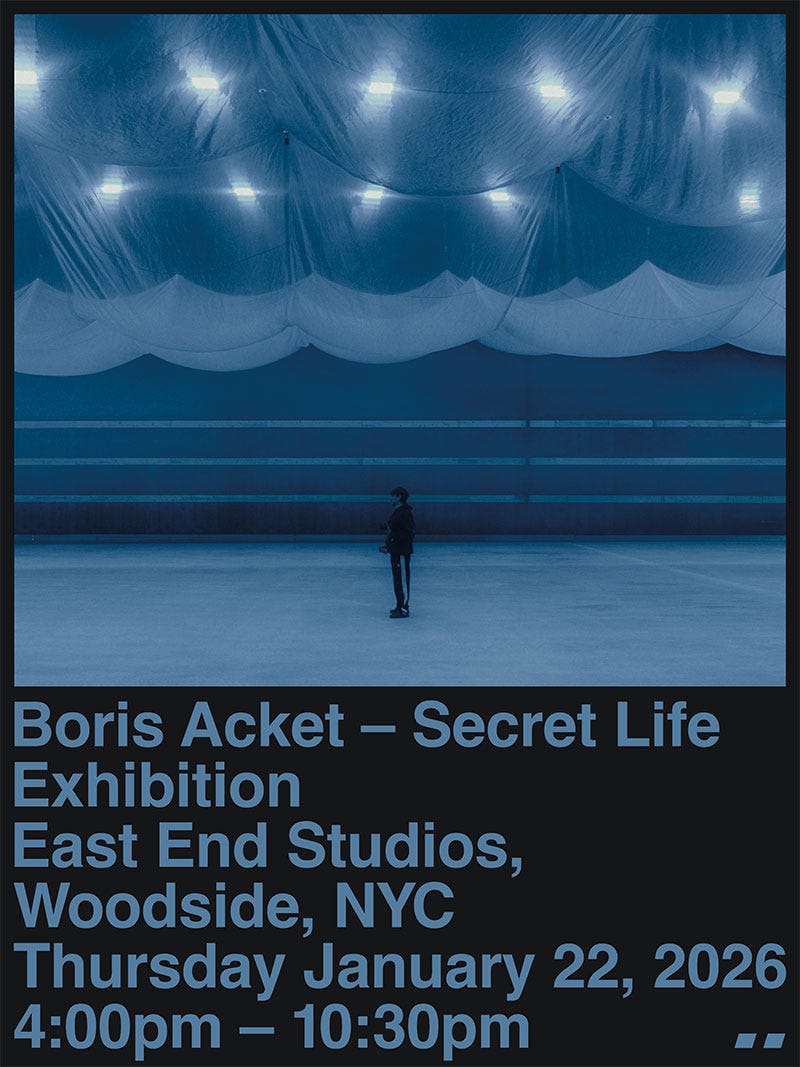
last week at the Secret Life exhibition in new york, fred slowed everything down.

the scenography from the USB002 tour - Einder, boris acket’s kinetic system of fabric and gravity - moves out of the charged urgency of the concert and into something sustained. something you can sit with. or lie under. the work breathes, literally and temporally.
set to a reworked version of Secret Life, fred’s ambient collaboration with brian eno, the installation unfolds without a start or finish. sound drifts. fabric responds. people come and go. every thirty minutes, a generative storm passes through the space -briefly unsettling the calm before dissolving again. the room resets itself. so do you.
what emerges is closer to a ritual than a performance. a shared environment where listening stretches beyond attention and into presence. the boundaries between gallery and venue blur. between collective experience and private interiority. time loosens its grip.
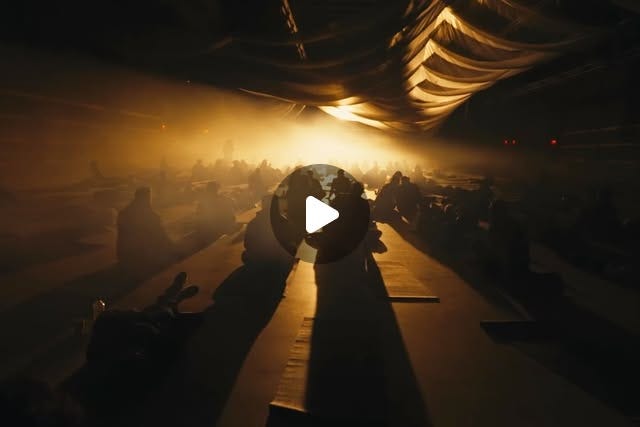
this project carried “intimacy at scale” i was referring to earlier. Secret Life itself is an exchange between two artists working with restraint and trust. Einder stands among boris acket’s most personal works. the USB002 tour forged a shared language that extended beyond production into friendship.
that closeness is the point. between people. between materials. between sound and body.
fred’s work has always treated music as something you enter rather than consume. the exhibition makes that impulse explicit. you don’t watch it happen. you stay with it. however long you need.
this is what i imagine every concert of his feels like.
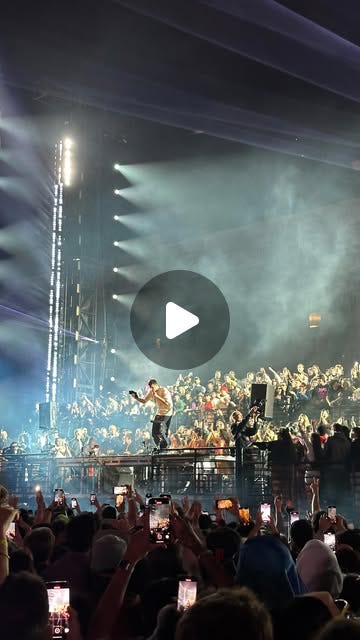
i still haven’t seen him live. but until that day comes, i play Arun’s Rooftop (Live from London) as the sun goes down on a daily basis, and it feels close enough. like borrowing someone else’s memory until i get my own.
that fact feels less important than it should because the work doesn’t position itself as something you must witness to understand. it arrives anyway - through recordings, through environments, through the quiet confidence of an artist who isn’t trying to extract anything from his audience.
the artist’s appeal isn’t about youth culture, or taste, or even sincerity as a virtue. it’s about offering loose structure in a moment that lacks it. about building places - sonic, physical, emotional - where feeling isn’t rushed or optimized.
and maybe that’s the quiet reason everyone loves fred again -
because in an age obsessed with being seen, he’s building spaces where people can simply exist as they are.
fred again.. has built something people can stay inside while everything else keeps moving.
- kashvi
Really nice view! it shows a deeper reflection on what music means to you.
I used to be more obsessed with his music, especially around 2020, but it comes to me in waves now.
I listen to around 10–30 new songs a week, and his music still stands out. It speaks to people because it blends emotion with a unique ability to produce and curate sounds.
One of my deepest passions has been to make playlists build around this kind of music / melodic techno / that builds emotion even without words
What I love about music in general is how people use it both to balance their mood and, sometimes, to lean into it! and his music manages to do both.
I’ve grown to dislike how he’s become more of a status symbol to play, but I guess that’s one of the costs of getting big.